
Summary:
Most Nassau County homeowners don’t think about their property lines until something forces the issue — a fence going up next door, a permit application that gets kicked back, or a neighbor who’s suddenly very interested in where your driveway ends. By then, the stakes are already high.
A property line survey answers one simple question: where exactly does your property begin and end? But the answer carries real legal and financial weight, especially in Nassau County, where lots are dense, homes are valuable, and building departments in 64 different villages each have their own requirements. Here’s what you need to know before your next project — or your next dispute.
Property Line Surveying: What It Actually Involves
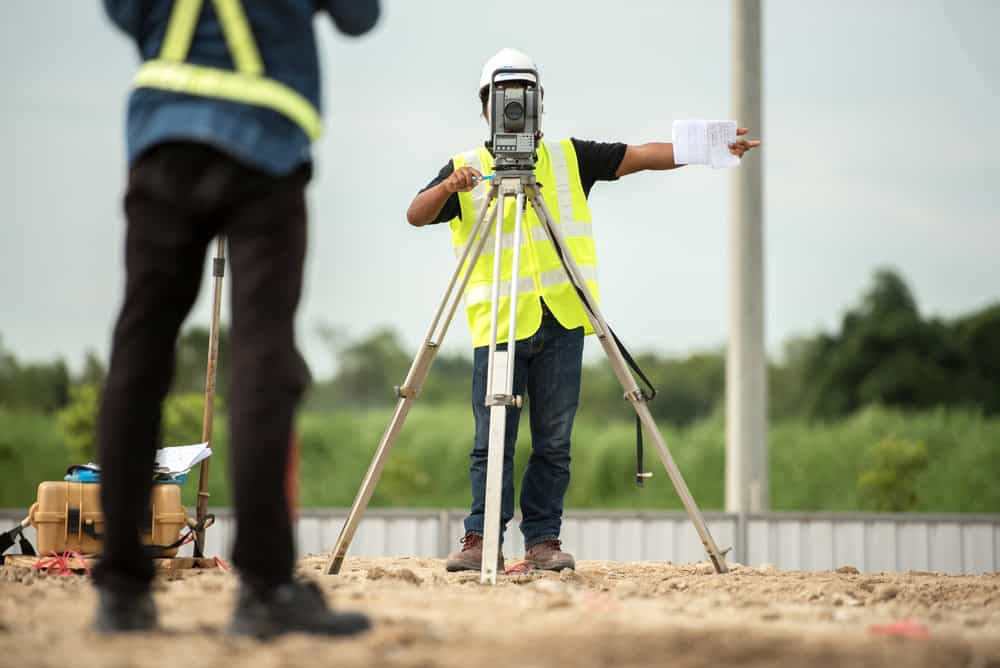
A property line survey is a professional determination of your property’s legal boundaries. We research your deed, review historical plat maps and public records, then perform fieldwork using GPS equipment and total stations to locate or re-establish your exact corners. The result is a signed and stamped survey map — a legal document that shows boundary lines, dimensions, improvements like your house and driveway, easements, and any encroachments.
That last word matters. An encroachment means something — a fence, a shed, a retaining wall — is sitting on land it shouldn’t be. In Nassau County’s tightly packed neighborhoods, where lot widths of 60 to 80 feet are common, even a two-foot error is a real problem. A survey finds it before it becomes a dispute, a permit rejection, or a lawsuit.
Finding Your Property Lines: What Actually Works

When homeowners want to find their property lines, the instinct is usually to start with something free — Google Maps, Zillow, or the Nassau County Land Records Viewer at lrv.nassaucountyny.gov. Those tools are genuinely useful for getting a general sense of your parcel, and the county’s tax maps are a reasonable starting point for research. But they’re not legally valid for permits, construction, or dispute resolution, and they can be off by several feet.
Some homeowners go looking for the iron pins set during the original survey. If your home was built in the 1950s or 1960s — as most Nassau County properties were — those pins may still be in the ground. Or they may have been disturbed by decades of landscaping, utility work, or simple wear. Finding a pin doesn’t confirm it’s in the right place. Only a licensed surveyor can legally verify that.
The deed is another common starting point. Most Nassau County deeds include a metes and bounds description — a legal narrative that defines your property boundaries using directions, distances, and reference points. Reading one isn’t straightforward. They reference monuments that may no longer exist, use measurement conventions from decades past, and require professional interpretation to translate into actual ground positions. Understanding what a metes and bounds survey involves helps explain why deed research is just one part of the process, not a substitute for fieldwork.
The only method that produces a legally valid, permit-ready, court-admissible answer is a professional property line survey performed by a New York State licensed land surveyor. Everything else gives you a starting point, not a conclusion.
Property Markers and What They Mean for Your Nassau County Lot
Property markers — also called monuments — are the physical objects that mark your property corners in the ground. They come in a few forms: iron rods or rebar driven into the soil, concrete monuments set flush with the ground, or in older Nassau County subdivisions, sometimes just a chiseled mark on a curb or a drill hole in pavement. When we perform a boundary survey, part of the job is locating existing markers, confirming their accuracy, and setting new ones where they’re missing or damaged.
Property line markers are not decorative. They’re the physical record of where a legal boundary sits, and they carry real significance if a dispute ever goes to court or a building department asks for documentation. In Nassau County, where many homes were built as part of large post-war subdivisions — Levittown being the most famous example — the original markers from the 1940s and 1950s are sometimes still in place, sometimes missing, and sometimes in the wrong position due to decades of ground movement or prior construction.
When we perform a boundary survey, we don’t just find existing markers and call it done. We compare their positions against the deed description, historical records, and adjacent surveys to confirm they’re accurate. If something doesn’t line up, we document it. That’s the difference between a survey and a guess — and it’s why the signed, stamped document at the end of the process is a legal record, not just a map.
Fence Line Survey and Boundary Survey for Fence Projects in Nassau County
Fence installation is the single most common reason Nassau County homeowners call us. And it makes sense — before you spend thousands of dollars on materials and labor, you need to know where the line actually is. Building a fence even a foot onto a neighbor’s property can mean a forced removal, a damaged relationship, and a bill you didn’t plan for.
Nassau County’s Town of Hempstead, Town of Oyster Bay, and Town of North Hempstead building departments all require a current survey as part of the fence permit application process. An old survey from when you bought the house may not qualify as “current” — especially if it predates recent improvements or is more than a few years old.
What a Boundary Survey for a Fence Actually Covers
A boundary survey for a fence does more than just tell you where the line is. It produces a legal document showing your exact property boundaries, the location of existing improvements, and any easements that might affect where a fence can legally be placed. That last point trips up a lot of homeowners — utility easements running along rear or side property lines are common in Nassau County, and they often restrict what you can build within a certain distance of the line, even on your own property.
The survey also identifies encroachments from neighboring properties. If your neighbor’s shed or garden bed is already sitting on your side of the line, you’ll want to know that before your fence goes in — not after. And if your fence will run along a shared boundary, having a survey on record protects you if the neighbor later claims it’s in the wrong place.
A fence line survey typically involves a field visit to locate or re-establish your property corners, followed by the production of a signed and stamped survey map. In some cases, we’ll also physically stake the line — placing wooden stakes or flags along the boundary at regular intervals so your fence contractor can follow it precisely. This is sometimes called property line marking, and it’s a separate but related service that takes the guesswork out of the installation entirely.
The practical upside is significant. A fence contractor who has a staked line to follow makes fewer mistakes, works faster, and has no excuse for going off course. The survey cost is modest compared to the cost of tearing out and rebuilding a fence that was installed in the wrong place.
Property Survey for Fence Cost: What to Expect in Nassau County
Cost is the question everyone has before they call, and it’s a fair one. For residential lots in Nassau County — most of which are under half an acre — we typically offer flat-rate pricing rather than per-acre calculations. Fence surveys specifically tend to run between $200 and $1,200 for a basic property line determination, with full staking services potentially reaching $3,200 depending on lot size and complexity.
Properties with complicated deed histories, missing original monuments, or significant terrain variations cost more to survey than a standard quarter-acre lot in Levittown or Westbury. Nassau County’s older housing stock means some properties do have complicated histories — conflicting deed descriptions, multiple survey vintages, or boundary lines that don’t perfectly match what’s on the ground.
The factors that most affect your cost are the size of your property, the condition and availability of prior survey records, whether you need physical staking in addition to the survey document, and how much deed research is required. Getting a quote before you commit costs nothing. We offer free, no-obligation estimates, so you’ll know the number before any work begins. That transparency matters — especially when you’re already budgeting for a fence installation on top of the survey.
Who to Call for a Property Line Survey in Nassau County, NY
If you’re planning a fence, pulling a permit, dealing with a neighbor dispute, or just want to know exactly what you own, a professional property line survey is the clearest path to a definitive answer. In Nassau County — where lots are small, values are high, and building departments are active — getting it right from the start is almost always cheaper than fixing a problem after the fact.
What separates a good surveyor from a frustrating one comes down to three things: local knowledge, communication, and turnaround time. Nassau County’s deed history, municipal permit requirements, and dense lot configurations aren’t something you can learn from a textbook. They come from decades of working in this specific market.
Islandwide Land Surveyors has been serving Nassau and Suffolk County homeowners for over 50 years, with an 8-day average turnaround, a 5-star Google rating, and a team that performs both original and update surveys — so your records stay with us for the long term. If you’re ready to find out exactly where your property lines are, reach out to us for a free quote.
—
FREQUENTLY ASKED QUESTIONS
How can I get my property lines marked?
Call a licensed land surveyor. After reviewing your deed and any prior survey records, we’ll perform fieldwork to locate or re-establish your property corners and physically mark them with iron pins or stakes. In Nassau County, this process typically takes about a week. We offer property line marking as part of our boundary survey services across Nassau, Suffolk, and Queens Counties, with an average turnaround of 8 days from the time you reach out.
What is the cost of a surveyor for property lines?
For a standard residential lot in Nassau County, most boundary surveys fall somewhere between $1,200 and $3,500, depending on lot size, the condition of existing monuments, and how much historical research is involved. Smaller lots with clean deed histories tend to be on the lower end. Properties with complicated histories or missing markers take more time and cost more accordingly. The best way to get an accurate number for your specific property is to request a free quote — there’s no obligation, and you’ll have a real figure to work with before committing to anything.
What is a lot survey?
A lot survey is another term for a boundary survey — it establishes the legal boundaries of a specific parcel of land as described in the deed. In Nassau County, where most residential properties are defined lots within recorded subdivisions, a lot survey confirms that the boundaries on paper match what’s actually on the ground. It’s the document your building department, title company, or lender will ask for when they need official confirmation of your property lines.
Do I need a survey before building a fence on my property line?
Yes — and not just as a precaution. Nassau County’s Town of Hempstead, Town of Oyster Bay, and Town of North Hempstead building departments all require a current survey as part of the fence permit application. Beyond the permit requirement, building without a survey is a real financial risk. A fence installed even slightly over the line can trigger a removal order or a neighbor dispute that costs far more to resolve than the survey would have.