
Summary:
You’ve found the house. Made the offer. Got the mortgage pre-approval. Now you’re deep in the closing process, and someone—your attorney, your lender, maybe your title company—just mentioned you need a property survey. Another expense? Another thing to coordinate before closing?
Here’s the reality: a land survey isn’t just another line item on your home buying checklist in NY. It’s the document that tells you exactly what you’re buying, where your property ends, and whether there are issues lurking that could blow up your title insurance or spark a legal dispute with your new neighbors. In Nassau and Suffolk Counties, where median home prices are pushing past $800,000, a $600 boundary survey isn’t an optional expense—it’s protection for one of the biggest investments you’ll ever make.
So do you actually need a survey before closing? Let’s break down when it’s required, when it’s recommended, and what happens if you skip it.
Is a Property Survey Required for Closing in New York?
The short answer: it depends. New York State doesn’t legally require you to get a land survey before buying a home—unless you’re purchasing vacant land. But that doesn’t mean you’re off the hook.
Your mortgage lender might require one before approving your loan. Your title company will almost certainly want one to issue full coverage without carving out exceptions. And if you’re refinancing, the same survey requirements often apply. The decision usually comes down to who’s involved in your transaction and how much risk they’re willing to accept on your property.
Even when a survey isn’t mandatory, most experienced real estate attorneys will tell you it should be. Because once you close, what you don’t know about your property boundaries can absolutely hurt you—and cost you.
When Lenders Require a Survey for Mortgage Approval in NY

If you’re financing your home purchase in Nassau or Suffolk County, your lender has significant say in whether you need a survey. Most mortgage companies want confirmation that the property securing their loan actually matches what’s described in the deed—and that there aren’t any surprises hiding in the property lines that could affect the collateral value.
Here’s where it gets complicated. Some lenders in New York no longer require surveys for residential properties, especially if the seller has an existing survey that can be updated through a visual inspection. They rely on something called a survey affidavit, where the seller swears nothing has changed since the last survey was completed. The lender gets automatic survey coverage in their title insurance policy through the ALTA endorsement, so they’re protected either way.
But you? You’re not protected. If there’s no current survey certified to you and your title company takes an exception for “any state of facts an accurate survey would show,” you could be on your own if a boundary issue surfaces after closing. That fence you assumed was on your property line? The neighbor’s shed that’s actually two feet over the boundary? The drainage easement running through your backyard that nobody mentioned? Without a survey, your title insurance might not cover any of it.
Even if your lender doesn’t require a survey for mortgage approval, your attorney should push for one. Because the lender’s title insurance coverage protects the lender—not you. A boundary survey certified to you as the buyer gives you direct legal recourse if something’s wrong with the property lines or if the surveyor made an error. It’s your protection, not theirs.
The bottom line: don’t assume that because your lender didn’t demand a survey, you don’t need one. Ask your real estate attorney. Check with your title company about coverage exceptions. And if you’re spending $800,000 on a home in Nassau County, spending $600 to know exactly what you’re buying isn’t the place to cut corners on your home buying checklist.
What Title Insurance Companies Require for Full Coverage
Title insurance is supposed to protect you from defects in your property’s title—things like liens, unpaid taxes, encumbrances, and boundary problems. But here’s what most homebuyers don’t realize until it’s too late: without a property survey for closing, your title insurance policy is going to include a major exception for anything a survey would have revealed.
Title companies require surveys to insure against boundary line problems and encroachments. If they don’t receive a current, certified survey, they’ll add language to your policy that essentially says, “We’re not covering any issues related to property boundaries, encroachments, easements, or structures that cross property lines.” That exception stays with your policy for as long as you own the property—and it can leave you financially exposed.
Let’s say your neighbor’s fence is actually three feet onto your land. Or their driveway encroaches on your property line and has been there for 15 years. If that encroachment has existed long enough under New York law, they could claim adverse possession—and you could lose legal ownership of that strip of land. Without a survey identifying the encroachment before closing, your title insurance won’t help you fight it or cover your legal costs.
The survey also reveals easements, which are legal rights someone else has to use part of your property. Utility companies often have easements for power lines or gas mains. Neighbors might have easement rights for shared driveways or access roads. Municipalities sometimes hold drainage easements that restrict what you can build or plant. These easements are recorded in public records, but knowing where they physically sit on your property matters tremendously. You don’t want to build a deck over a utility easement or plant expensive landscaping in a right-of-way that needs to remain accessible.
In some cases, you can save money by using an existing survey if the seller has one from a previous transaction. The title company can arrange for a visual inspection to confirm nothing’s changed since the original survey was completed. But here’s the critical catch: that old survey isn’t certified to you as the new buyer. If the original surveyor made a mistake in the boundary measurements, you have no legal recourse against them. A new survey, certified to you, the lender, the seller, and the title company, gives everyone accountability and legal responsibility.
And if you’re buying a property in Nassau or Suffolk County that’s changed hands multiple times over generations—which is common on Long Island—those old deed descriptions might reference landmarks that don’t exist anymore. “Beginning at the old oak tree.” “Running along the stone wall to the creek.” We have to reconcile what’s written on paper with what actually exists on the ground today. That requires fieldwork, precise measurements, and professional expertise—not guesswork based on assumptions.
So yes, title companies want surveys for property closings. And if you want full title insurance coverage without exceptions that could leave you exposed to costly claims, you should want one too. It’s not about checking a box—it’s about protecting your investment and knowing exactly what you’re buying before you sign on the dotted line.
What a Boundary Survey Reveals About Your Property
A boundary survey isn’t just a map with some lines drawn on it. It’s a legal document that shows exactly where your property begins and ends, what structures sit on it, and whether anything’s crossing boundaries it shouldn’t be crossing.
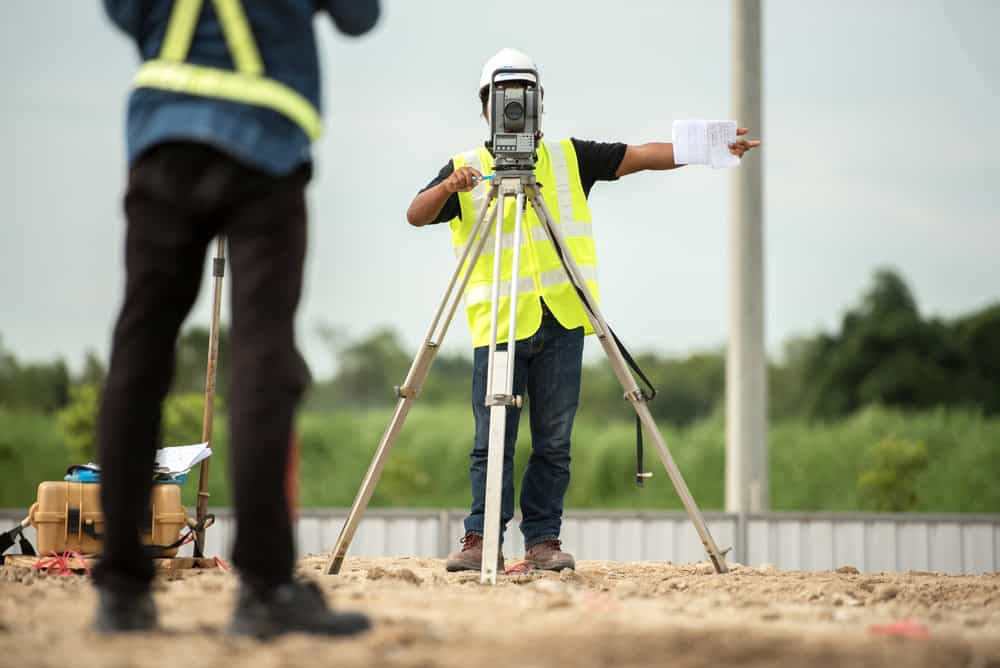
We visit your property with specialized equipment—GPS systems, laser measuring tools, and other precision instruments. We research historical records, review old deeds and filed maps, compare tax records, and then conduct fieldwork to take exact measurements. The result is a certified survey map that gets filed with your closing documents and shows your house, garage, shed, driveway, pool, fences, and how close each structure sits to your actual property lines.
It also reveals encroachments, easements, setback violations, and any structures that might not comply with local zoning laws. All things you absolutely need to know before you close on the property.
Encroachments and Boundary Disputes the Survey Catches Before Closing
Encroachments are one of the most common issues land surveys uncover in Nassau and Suffolk Counties—and one of the biggest reasons buyers are relieved they ordered a survey before closing. An encroachment happens when a structure from one property physically crosses onto another property’s land. It could be your neighbor’s fence installed two feet over the line, their storage shed built partially on your land, a corner of their paved driveway extending onto your property, or even tree branches and garden beds that have gradually crept across the boundary over time.
In Nassau and Suffolk Counties, where many properties have been bought and sold across multiple generations, a lot of assumptions about property lines get passed down like family heirlooms. “That fence has always marked the property line.” “The driveway’s been positioned like that for 40 years.” “Grandpa said the property ends at the hedgerow.” But assumptions aren’t legal boundaries—and they won’t hold up when a dispute arises or when you try to sell the property years down the road.
Here’s the problem that catches buyers off guard: most sellers genuinely don’t know there’s an encroachment on their property. They’ve never had the land surveyed professionally, or they’re relying on an outdated survey from decades ago when the property last changed hands. So when you show up at the closing table and the new survey reveals that the neighbor’s shed is sitting two feet onto your property, you’ve suddenly got a problem that needs solving before you can close—or a problem you’ll inherit if you close without addressing it.
The good news? If you catch the encroachment before closing, you have leverage to require the seller to fix it. They can negotiate with the neighbor to move or remove the structure, obtain a written boundary line agreement that legally documents the situation, adjust the purchase price to compensate you for the encroachment, or resolve it through other means. But if you close on the property without a survey and discover the encroachment six months later, you’re the one stuck dealing with it—and your title insurance likely won’t cover the costs of resolution because of that survey exception in your policy.
Fences are the most frequent encroachment culprits in residential properties. They’re often installed based on assumptions or visual estimates rather than professional surveys, and they’re visible enough that buyers eventually notice when something doesn’t look right. Sheds and outbuildings rank second on the list. Homeowners tend to place these structures wherever it’s convenient or aesthetically pleasing, not necessarily where property lines legally allow. Driveways, retaining walls, decks, patios, and even mature hedges—all of these can create encroachments that turn into expensive legal headaches if they’re not identified and addressed before closing.
And here’s the legal reality that makes this even more urgent: under New York property law, if you don’t address an encroachment promptly after discovering it, you risk losing legal rights to that portion of your land through adverse possession. The longer an encroachment exists without challenge, the stronger the neighbor’s adverse possession claim becomes. After a certain number of years of continuous, open use, they could actually claim legal ownership of that strip of your property. A boundary survey gives you the documentation you need to protect your property rights from day one of ownership—before any adverse possession clock starts ticking.
Bottom line: encroachments aren’t rare or unusual. They’re surprisingly common, especially on Long Island properties with long ownership histories. And the only reliable way to know if your property has an encroachment issue is to get a professional boundary survey completed before you close on the purchase.
Easements, Setbacks, and Zoning Compliance Issues Surveys Uncover
Easements represent another critical discovery that property surveys reveal—and they can significantly affect how you’re able to use your land after closing. An easement is a legal right that someone else holds to use a specific portion of your property for a defined purpose. Utility companies typically hold easements to access underground power lines, gas lines, water mains, or sewer connections. Neighbors might have recorded easement rights for shared driveways, access roads, or pathways to reach their property. Municipalities sometimes maintain drainage easements that restrict what you can build, plant, or alter in certain areas of your land.
The tricky thing about easements is that they’re recorded in public land records, so they’ll show up during your title search and appear in your title commitment. But knowing that an easement exists somewhere on your property and knowing exactly where it’s physically located on your land are two completely different things—and that difference matters enormously. A survey shows you the precise location and dimensions of every recorded easement. That information becomes critical if you’re planning to install a fence, build a pool, construct a shed, plant expensive landscaping, or make any other improvements to your property. Build a structure over an active easement, and you might be legally required to remove it at your own expense when the easement holder needs access.
Setback requirements represent another issue that boundary surveys help clarify before you run into zoning violations. Most towns and counties in Nassau and Suffolk Counties have zoning ordinances that dictate minimum distances between structures and property lines. Front yard setbacks, side yard setbacks, rear yard setbacks—these measurements are all calculated from your legal boundary lines, not from where you think or assume your property ends based on fences or visual markers. A professional survey confirms that all existing structures on the property comply with current setback requirements, and it helps you plan any future building projects without accidentally violating local zoning laws.
If the survey reveals that an existing structure on the property violates setback requirements or was constructed without proper building permits, that’s information you need to know before closing—not after. You might need to obtain a certificate of occupancy from the town, apply for a zoning variance to grandfather the structure, or get documentation proving the structure predates current zoning regulations and is therefore legally nonconforming. Your real estate attorney can work with the seller to resolve these compliance issues during the closing process, but only if you discover them in time through a survey.
Surveys also provide detailed documentation of features like driveways, walkways, patios, pools, decks, and fences in relation to your actual property lines. If you’re buying a home with plans to add onto it or make significant improvements, you need to know exactly how much buildable space you have to work with under local zoning laws. The survey gives you that information in precise measurements, so there are no expensive surprises when you go to pull building permits for your addition or renovation.
And if you’re purchasing property in flood-prone areas of Nassau or Suffolk Counties—particularly near the water or in FEMA-designated flood zones—the survey can include elevation data that directly affects your flood insurance premiums. Some buyers order a separate flood elevation certificate, but we can often provide elevation information as part of the boundary survey, saving you time and money on a separate report.
The essential point is this: a boundary survey doesn’t just tell you where your property lines are drawn. It tells you what you can and can’t legally do with your land, what structures and features already exist, what easements and restrictions apply, and whether any compliance issues need resolution before you take ownership. For an investment of a few hundred dollars on a real estate transaction worth hundreds of thousands, that level of clarity and protection is invaluable.
Is a Land Survey Worth It Before Closing on Your NY Home?
So here’s where everything lands: you might not be legally required by New York State to get a land survey before buying a home. But if you’re financing the purchase, your mortgage lender might require one for loan approval. If you want full title insurance coverage without major exceptions, your title company will almost certainly require one. And if you want to know exactly what you’re buying—and protect yourself from costly surprises, boundary disputes, and legal headaches after closing—you absolutely should get one.
A boundary survey costs between $500 and $800 for most residential properties in Nassau and Suffolk Counties. Compare that modest investment to the tens of thousands of dollars you could spend resolving a boundary dispute through litigation, fixing an encroachment issue, defending against an adverse possession claim, or losing actual ownership of part of your property. The financial math isn’t complicated—and the peace of mind is priceless.
If you’re ready to move forward with your home purchase in Nassau or Suffolk County and want a property survey done right, we’ve been serving Long Island for over 50 years with the expertise and technology to get you accurate answers before closing.