
Summary:
Most Nassau County homeowners don’t think about their survey until their contractor asks for one. By then, it’s often too late to stay on schedule. Summer construction windows on Long Island are short, permit approvals take time, and surveyors book up fast once the season hits. If you’re planning to break ground this summer — on a pool, an addition, a new build, or anything that needs a permit — the survey needs to happen earlier than you think. Here’s what the timeline actually looks like, and what you need to know to keep your project moving.
Survey Before Construction: What Nassau County Projects Actually Require
The survey isn’t a formality. In Nassau County, it’s the document your building department uses to confirm that what you’re proposing to build is legal — that it meets setback requirements, doesn’t encroach on neighboring properties, and sits within the correct flood zone designation if applicable. Without a current, signed, and sealed survey from a licensed New York State Professional Land Surveyor, your permit application doesn’t move.
What trips people up is thinking they can use the survey from when they bought the house. Sometimes that’s possible — an update survey may be all you need. But if you’ve added a fence, a shed, a driveway, or any other improvement since that survey was done, it may no longer reflect the actual state of the property. And Nassau County’s building departments notice.
What Does a Construction Site Survey Actually Include?

A construction site survey isn’t one single thing — it’s a phase of work that typically involves several survey types depending on where you are in the project. Understanding what each one does helps you plan the timeline and avoid paying for the wrong thing at the wrong time.
A boundary survey establishes your exact property lines. This is usually the starting point, especially if you’re building close to a property line or if there’s any question about where your lot ends and your neighbor’s begins. In Nassau County’s densely developed communities — places like Westbury, Mineola, or Lynbrook where lots are tight and neighbors are close — this matters more than people expect.
A topographic survey (commonly called a “topo”) maps the existing features of your land: elevations, contours, trees, structures, utilities, and drainage patterns. Your architect and engineer need this to design the project correctly. It’s not optional for most addition or new construction projects, and it needs to happen before design work is finalized — not after.
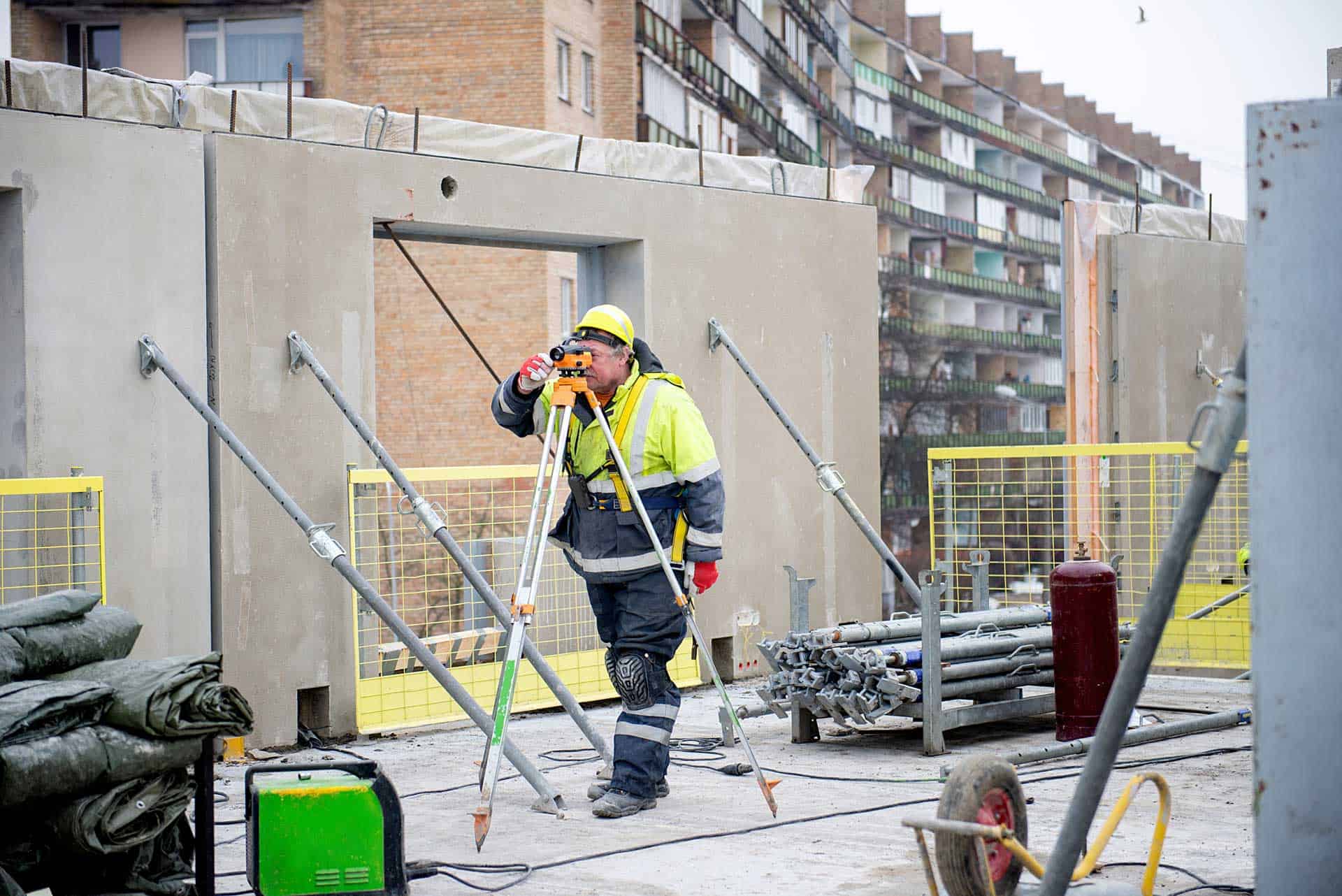
Construction staking comes later, once permits are approved and your contractor is ready to break ground. This is where we physically mark the proposed structure’s location on the ground so the contractor knows exactly where to dig, pour, and build. It’s precise work, and errors here translate directly into structural problems or setback violations that can be expensive to correct.
Finally, an as-built survey documents what was actually constructed, confirming it matches what was permitted. Many Nassau County municipalities require this before a certificate of occupancy is issued. Planning for it upfront — rather than scrambling at the end — keeps the final stage of your project clean.
Building Permit Survey Requirements in Nassau County's Towns and Villages
This is where Nassau County gets genuinely complicated, and where local knowledge makes a real difference. The county is divided into three towns — Hempstead, North Hempstead, and Oyster Bay — plus two cities, Long Beach and Glen Cove. Then there are 64 incorporated villages, each operating its own building department with its own submission requirements, setback rules, and documentation standards.
What that means in practice is that a homeowner in Great Neck has different permit requirements than a homeowner in Roslyn, even though they’re a few miles apart and both in the Town of North Hempstead. The Town of Oyster Bay, for example, explicitly requires a copy of the survey to be submitted with all new construction permit applications. Other municipalities have their own variations on that requirement.
A surveyor who works broadly across Long Island but doesn’t know the specific standards of your village can produce a technically accurate survey that still gets rejected at the building department. That rejection costs you time — sometimes weeks — and delays every other part of the project downstream.
For properties on Nassau County’s South Shore — in communities like Long Beach, Oceanside, Freeport, Merrick, or Massapequa — there’s an additional layer. Significant portions of these areas fall within FEMA-designated Special Flood Hazard Areas, particularly following the remapping that occurred after Hurricane Sandy in 2012. Construction in or near these zones requires a Flood Elevation Certificate, and no permit gets approved without one. If your property is in one of these areas, that certificate needs to be part of your planning from the start, not something you discover you need after you’ve already submitted your application.
Construction Survey Planning: How to Build Your Summer Timeline
The biggest mistake Nassau County homeowners make is treating the survey as the last box to check before construction starts. It’s actually one of the first. The sequence matters: survey first, then permit application, then permit approval, then contractor mobilization. Each step depends on the one before it.
Summer construction season on Long Island runs roughly May through September, with the most productive months being June through August. That window is shorter than it feels. And permit approvals in Nassau County can take weeks to months depending on the municipality, the scope of the project, and how complete your submission is when you hand it in.

When Should You Schedule Your Survey for a Summer Construction Project?
The short answer: earlier than you think, and before you hire your contractor.
If you want to break ground in June or July, your survey should ideally be scheduled in March or April — before the spring rush hits and surveyors’ schedules start filling up. That gives you enough runway to get the survey completed, have your architect finalize the design using the topo data, submit your permit application, and wait for approval — all before your contractor is standing in your driveway ready to start.
Here’s what the realistic timeline looks like for a typical Nassau County summer project. Survey work happens in March or April. The permit application, incorporating the survey and construction plans, goes in April or May. Permit review and approval takes anywhere from four to eight weeks, sometimes longer for larger projects or municipalities with heavier volume. Construction staking happens once the permit is in hand. And the contractor mobilizes from there.
Where people get into trouble is compressing that timeline. They decide in May that they want a pool by August. By the time they find a surveyor, get the survey done, submit the permit, and wait for approval, August is gone. The project either gets pushed to fall — which is workable but not what they wanted — or they try to rush the front end of the process and end up with errors that cause rejections and cost more time than they saved.
Peak season creates real scheduling pressure across the industry. Surveyors in Nassau County get booked up in late spring, and turnaround times that are perfectly reasonable in February can stretch significantly by May. If you’re planning a summer project, booking your survey early isn’t just smart — it’s often the difference between staying on schedule and losing weeks.
How to Coordinate Your Survey with Your Contractor's Schedule
The survey and the contractor need to be sequenced, not run in parallel. A common mistake is hiring a contractor, agreeing on a start date, and then trying to fit the survey in around that commitment. It rarely works cleanly, and when it doesn’t, the contractor ends up waiting — which costs money and goodwill.
The cleaner approach is to get the survey done first, use it to finalize your design and permit application, and only then confirm a firm start date with your contractor. That way, your contractor’s schedule is built around a realistic timeline, not an optimistic one.
For projects that involve multiple survey phases — which most construction projects do — it helps to work with a single firm that can handle the full sequence. When the same surveyor who did your boundary survey and topo also handles your construction staking and eventual as-built, there’s no handoff between vendors, no gap in the records, and no time lost getting a new firm up to speed on your property. It also tends to produce more accurate staking, because the surveyor already knows the site.
There’s also a practical communication benefit. When your contractor has a question about where a property line falls, or your architect needs a detail clarified from the topo, you’re not chasing two different firms for an answer. One call handles it.
Weather is worth mentioning too. Summer is ideal for survey fieldwork — frozen ground and snow cover in winter can complicate certain survey types, and spring can bring access issues on wet sites. Scheduling your survey for late March through May captures good field conditions while still leaving enough runway for permit approvals before peak construction season.
For homeowners on the South Shore in flood-prone communities, coordinating the Flood Elevation Certificate into the overall survey timeline is essential. It’s not a separate process to deal with later — it’s part of the permit package, and it needs to be ready when everything else is.
Planning a Summer Build in Nassau County? Start with the Survey.
The survey is the foundation of every successful construction project — not because it’s required paperwork, but because everything that follows depends on it being accurate and on time. Get it right and early, and the rest of the timeline has a real chance of holding together. Wait too long, and you’re chasing the season.
Nassau County’s combination of tight lots, municipal complexity, flood zone considerations, and peak-season demand makes construction survey planning more involved here than in most markets. Knowing what you need, in what order, and when to schedule it is genuinely useful knowledge — and it’s the kind of thing that separates projects that finish on time from ones that don’t.
If you’re planning a summer build in Nassau County and want to understand exactly what surveys your project requires and how to sequence them, we at Islandwide Land Surveyors have been doing this work in Nassau and Suffolk Counties for over five decades. Reach out to our team and let’s map out the right timeline for your project before the season gets away from you.