

Summary:
You searched “average cost of a land survey” and found numbers like $375, $525, maybe $600. Then you called a surveyor in Nassau County and heard something closer to $900, $1,200, or more. Now you’re wondering if you’re being overcharged — or if those online guides are just wrong.
They’re not wrong for the markets they’re describing. They’re just not describing Long Island. Nassau County has its own pricing reality, shaped by factors that national averages don’t account for. Here’s what surveys actually cost here, why the range is wider than you’d expect, and how to make sense of the quotes you’re getting.
Average Cost of a Land Survey in Nassau County, NY
For a standard residential boundary survey on a typical lot in Nassau County — under one acre, single-family home, reasonably straightforward title history — you’re generally looking at $600 to $1,500. That’s the realistic range for most homeowners here, and it’s already well above what the national guides suggest.
For properties with more complexity — irregular lot shapes, disputed corners, missing monuments, or title records that go back several decades — the range shifts to $1,200 to $3,500. That’s not unusual in Nassau County, where much of the housing stock was developed in the postwar era and surveys from the 1950s and 1960s are still floating around in title files.
The short version: if a national website tells you to budget $500, budget more. Nassau County isn’t a typical market, and the surveys here reflect that reality.
Land Survey Cost Per Acre — How Property Size Affects Your Price
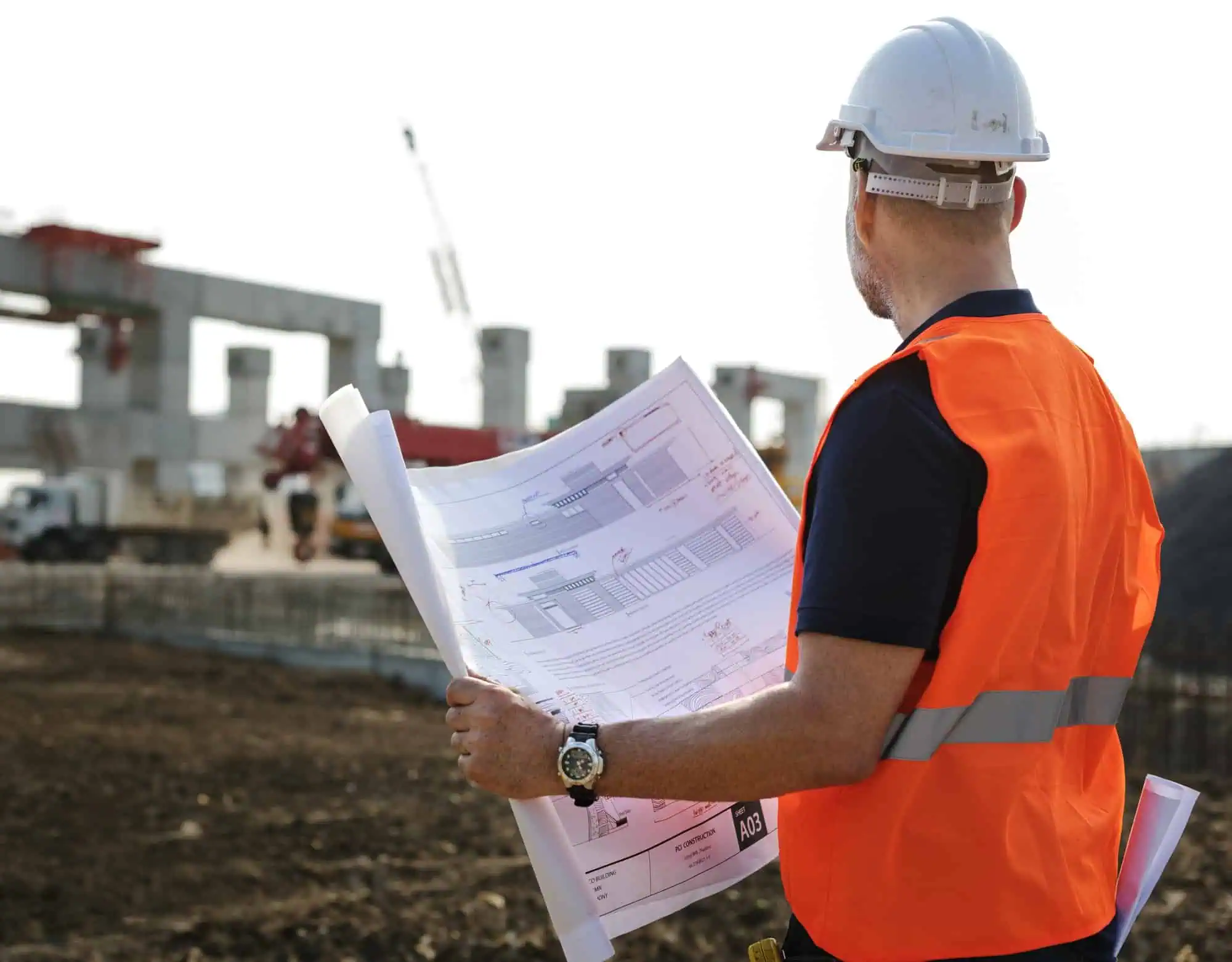
Per-acre pricing comes up often when people research survey costs, and it’s a useful concept — but it applies differently depending on where you are and what you own. For most Nassau County homeowners, lot size isn’t the primary cost driver the way it might be in a rural or agricultural context. The typical residential lot here is well under an acre, so the per-acre question is less relevant than the complexity question.
That said, size does matter. A smaller, well-documented lot with clear corners and a recent prior survey is faster to complete and costs less. A larger lot — or one where the surveyor has to reconstruct boundary evidence from scratch because old monuments are missing or displaced — takes more time in both the research phase and the field, and that time is reflected in the price.
For larger parcels, vacant land, or commercial properties in Nassau County, per-acre pricing becomes more relevant. In those cases, costs can scale significantly based on terrain, the number of boundary corners that need to be established, and the depth of historical research required to support the survey’s conclusions.
Two properties on the same Nassau County block can have meaningfully different survey costs. One might have a clean chain of title, visible iron pins at every corner, and a filed subdivision map that makes the job straightforward. The other might require a full search of Nassau County’s land records, coordination with adjacent property surveys, and field work to locate or re-establish corners that haven’t been touched in forty years. Same neighborhood, different scope, different price.
When you’re getting quotes, ask what’s included. A lower number that doesn’t account for the actual condition of your property’s records isn’t a better deal — it’s an incomplete scope.
Land Surveyor Prices by Survey Type — Which One Do You Actually Need?
One of the most common sources of confusion when people shop for surveys is that “a survey” isn’t one thing. The type of survey you need depends entirely on what you’re trying to accomplish, and ordering the wrong type wastes both money and time — especially if you’re working against a closing deadline or a permit application window.
A boundary survey is the most common request from residential homeowners in Nassau County. It establishes your property lines, confirms corners as described in your deed, and documents any encroachments or easements that affect the property. For most home sales, permit applications, and fence or pool projects, this is what you need. Expect to pay $600 to $1,500 for a standard residential lot, with more complex situations running higher.
An ALTA/NSPS Land Title Survey is a different animal entirely. These follow strict national standards and are typically required for commercial transactions, or when a lender or title company needs a higher level of assurance than a standard boundary survey provides. They’re more comprehensive, more time-intensive, and priced accordingly — well above what a residential boundary survey costs.
A topographic survey documents elevation changes, slopes, and terrain features across a property. If you’re planning a construction project that involves grading, drainage, or site design, this is what your architect or engineer will ask for. It’s a different scope from a boundary survey and is priced separately.
A Flood Elevation Certificate is something many Nassau County homeowners encounter, particularly in the south shore communities — Long Beach, Atlantic Beach, Lido Beach, the Five Towns area — and parts of the north shore near harbors and inlets. These certificates document your building’s position relative to the base flood elevation and are used by insurance agents to calculate your flood insurance premiums. If your property is in or near a FEMA flood zone, this may be required by your lender or insurer.
The right starting point is always the same: know why you need the survey, and make sure the firm you call understands your specific situation before they quote you a price.
Real Estate Survey Cost — What Buyers and Sellers in Nassau County Should Know
A significant portion of the people searching for land survey costs are in the middle of a real estate transaction. Their lender flagged it, their attorney mentioned it, or they’re a week from closing and just found out they need one. If that’s where you are, the most important thing to know is that this is solvable — but the details matter.
In Nassau County, where the median home price sits around $831,000, a survey is a small fraction of the total transaction cost. What it protects, though, is enormous. Without a current survey, a title insurance policy will typically exclude coverage for boundary issues and encroachments. If a problem surfaces after closing, that’s your problem to fix — out of pocket, after the fact.

Do You Need a New Survey When Buying a House in Nassau County?
This comes up constantly in Nassau County real estate transactions. The sellers have a survey from when they bought the house — maybe fifteen years ago, maybe thirty — and the question is whether that old survey will satisfy the lender and title company.
The short answer is: often no, and sometimes it depends. Lenders typically want a survey that reflects current conditions on the property. If the sellers added a pool, a deck, a fence, or any other structure since their last survey, the old document doesn’t show it. That matters because those improvements could be in violation of setback requirements, encroach on an easement, or affect the property lines in ways that the lender needs to understand before committing to a mortgage.
Nassau County’s housing stock adds another layer of complexity. A lot of homes here were built in the 1950s through 1970s, and surveys from that era — even if they’re technically “on file” — may not reflect the precision or detail that modern lenders and title companies expect. The Nassau County Land Records Viewer maintains property maps and assessment data that surveyors reference during the research phase, but that data doesn’t replace a current field survey.
The practical advice: don’t assume the old survey will work. Check with your attorney and lender early in the process. If a new survey is required, getting it ordered as soon as possible gives you the most flexibility. Waiting until the week before closing is when things get stressful — and sometimes expensive if you need to rush the timeline.
How to Read a Survey Quote — and What Makes One Firm Worth More Than Another
You’ve called a few surveyors and you have quotes ranging from $400 to $1,500 for what sounds like the same job. The variation isn’t random, and it doesn’t necessarily mean someone is gouging you or someone else is cutting corners. It usually means the quotes are describing different scopes of work — and it’s worth understanding why before you pick the lowest number.
The first thing to verify with any firm you’re considering is licensing. In New York State, land surveyors must hold a license as a Registered Professional Land Surveyor (RPLS). A survey from an unlicensed individual isn’t legally valid for mortgage lenders, building departments, or any legal proceeding. It doesn’t matter how low the price is — if it can’t be used, it’s worthless. Verifying RPLS licensing should happen before you evaluate anything else about a firm.
Beyond licensing, the range in quotes often reflects how thoroughly a surveyor has assessed your specific property before pricing it. A firm that gives you an instant flat quote without asking about your lot size, the age of your title, or the condition of existing monuments may be pricing a generic job — not your job. When the field crew arrives and discovers that the property corners are missing or that there’s a title complication requiring additional research, that “low” quote can change.
Turnaround time is another variable that doesn’t always show up in the quote but matters enormously when you’re working against a deadline. In Nassau County’s active real estate market, a surveyor who can deliver in five to eight days is a different value proposition than one who’s backed up for three to four weeks — even if the price is similar.
The questions worth asking any surveyor before you commit: Are your surveyors RPLS-licensed in New York? What’s your realistic turnaround for a property like mine? Is your quote fixed, or could it change once you pull the records? A firm that answers those questions directly, without hedging, is one that’s confident in what they’re offering.
Getting a Land Survey in Nassau County — What to Do Next
The gap between national average pricing and what you’ll actually pay in Nassau County is real, and now you know why. Long Island’s property history, lot complexity, and active real estate market make surveys here more involved than a simple national benchmark can capture. Budgeting $600 to $1,500 for a standard residential boundary survey is a reasonable starting point — and knowing which type of survey your situation actually calls for is the most important step before you call anyone.
If you’re under time pressure — a closing coming up, a permit application waiting, a property line question that needs an answer — the worst thing you can do is wait. Turnaround times fill up, especially in the spring and summer when transaction volume peaks across Nassau County.
We’ve been working on Long Island properties since 1970. If you want a straightforward quote with no obligation, reach out to us and tell us what you’re dealing with. We’ll give you a real number — not a guess.