

Summary:
Here’s something most Nassau County homeowners find out too late: in New York State, not just anyone can legally survey your property. It doesn’t matter how long someone has been in business, how cheap their quote is, or how professional they look online. If they’re not a licensed land surveyor under New York Education Law Article 145, their work has no legal standing — for your fence permit, your real estate closing, or a boundary dispute that ends up in court.
This guide explains exactly what the law requires, what a registered surveyor actually is, and why the distinction matters far more than most people realize.
What New York Education Law Article 145 Actually Requires
New York Education Law Article 145 is the state statute that governs the licensing of land surveyors — and it’s more specific than most people expect. The law states plainly that only licensed land surveyors may make boundary line determinations in New York State. That’s not a technicality buried in fine print. It’s the legal foundation for every boundary survey, property line determination, and deed description in the state.
To earn that license, a surveyor must hold a qualifying degree in land surveying, accumulate a minimum of eight years of combined education and experience credit, pass a 14-hour national examination, and pass a separate two-hour New York State-specific examination. After all that, the license must be renewed every three years with mandatory continuing education. This is not a low bar.
What Makes a Survey Legally Valid in New York?
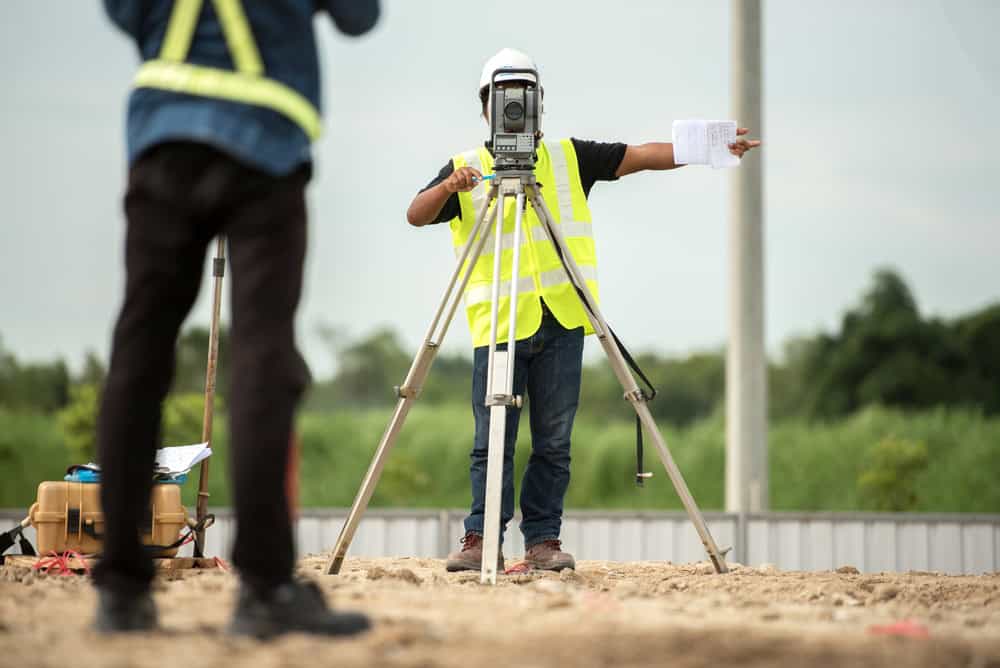
A survey isn’t just a map of your property — it’s a legal document. For it to hold up legally, it needs to come from a licensed professional whose credentials are verifiable and whose work is traceable.
Under New York law, every licensed land surveyor must have an official seal, approved by the state board, that contains the surveyor’s name. That seal must appear on any survey they produce. If a survey map doesn’t carry a licensed surveyor’s seal and signature, it has no legal standing — period.
This matters enormously in practice. A Nassau County building department won’t accept an unsealed survey for a fence permit application. A title company won’t remove the survey exception from your title insurance policy without a survey from a licensed professional certified to you, the current buyer. And if a boundary dispute ever ends up in court, a survey without proper licensing and a valid seal won’t be admissible as evidence.
There’s another layer to this that catches people off guard. Under New York law, a licensed surveyor must provide their services directly to the client. A general contractor cannot hire a licensed surveyor and pass that survey along to you as though it were your own. The professional relationship has to run directly from the licensed surveyor to you. If there’s an unlicensed third party in between, the survey doesn’t satisfy the legal requirement — regardless of who actually did the fieldwork.
This is why verifying a surveyor’s credentials before you hire them isn’t just due diligence — it’s the only way to know whether the work you’re paying for will actually be usable. The New York State Education Department maintains a public license lookup where you can confirm any surveyor’s active status and check for any disciplinary history. It takes about two minutes and can save you from a very expensive problem.
Nassau County Permit Requirements and Why Licensing Is Non-Negotiable
Nassau County’s regulatory landscape makes licensed surveying more than a legal formality — it’s a practical requirement for getting anything built. The county’s three townships — the Town of Hempstead, the Town of Oyster Bay, and the Town of North Hempstead — all require a current survey as part of a fence permit application.
That means if you want to put up a fence along your property line, you can’t just eyeball it or rely on what your neighbor says. You need a survey from a licensed land surveyor before the permit will be approved. The same applies to pools, decks, additions, and most other residential construction projects. Nassau County’s building departments require survey documentation as part of the permit submission package.
With over 60 incorporated villages in Nassau County — each with its own zoning rules and setback requirements — the margin for error is narrow. A survey that doesn’t meet the legal standard gets rejected. You go back to square one, pay for a second survey, and delay your project.
There’s a timing issue worth understanding too. Nassau County’s average home is about 73 years old. A significant portion of the housing stock was built between the 1940s and 1970s, which means many properties were either never surveyed or were surveyed decades ago using standards that no longer apply. An old survey isn’t certified to you as the current owner, which means you have no direct recourse against the surveyor who prepared it, and the title company will take broad exceptions to protect itself. That “survey in the file” from 1974 may not reflect additions, encroachments, or changed property lines — and it almost certainly won’t satisfy a building department or title company today.
For homeowners on Nassau County’s south shore — communities like Long Beach, Oceanside, Island Park, Baldwin, and Merrick — there’s an additional consideration. Large portions of these areas fall within FEMA flood zones, and a Flood Elevation Certificate is required for flood insurance purposes. That certificate must be prepared by a licensed land surveyor, engineer, or architect. There’s no workaround.
Professional Property Surveyors: What to Look For Before You Hire
Knowing that a surveyor needs to be licensed is one thing. Knowing how to verify it — and what else to look for — is where most people get stuck. The good news is that the process is straightforward once you know what to check.
Start with the NYSED license lookup. Confirm the surveyor holds an active New York State license and check for any disciplinary history. Then ask whether they carry professional liability insurance — also called errors and omissions insurance — sized appropriately for your project. A licensed surveyor who can’t answer that question clearly is a red flag.
Finally, ask about turnaround time. In a market where Nassau County homes go to pending in around 26 days, delays in survey delivery can cost you a deal. A surveyor familiar with Nassau County’s townships and building departments will understand these timelines and plan accordingly.

Licensed Land Surveyor Cost: What You Should Expect to Pay in Nassau County
Cost is usually the first question, and it’s a fair one. For residential properties in New York, a boundary or title survey typically runs between $500 and $1,200. The exact figure depends on the size and complexity of the property, what records are available, and how much fieldwork is involved.
Nassau County’s density and the age of its housing stock can add some complexity — older deeds, missing monuments, and tight lot lines all take more time to work through. What’s worth keeping in mind is the comparison. A $500–$1,200 survey is a straightforward cost. A boundary dispute that ends up in court can run into tens of thousands of dollars in legal fees — and if you don’t have a valid licensed survey to back your position, you’ll be paying for one anyway, mid-dispute, under pressure.
There’s also the permit rejection scenario. If you hire an unlicensed surveyor because their quote was lower, and the Nassau County building department rejects the submission, you’re back to hiring a licensed surveyor from scratch. You’ve paid twice, lost time, and still haven’t broken ground. The “cheaper” option ended up costing more.
What we hear from Nassau County homeowners who’ve been through this is consistent: the price difference between a licensed surveyor and an unlicensed one rarely amounts to much in the first place. And when you factor in what’s at stake — a real estate closing, a building permit, a property line dispute — the gap disappears entirely. A survey that can’t be used isn’t a survey. It’s a piece of paper.
Frequently Asked Questions About Registered Surveyors in Nassau County
**What’s the difference between a “registered” and a “licensed” surveyor in New York?**
In practice, the terms are used interchangeably in New York. A registered surveyor and a licensed land surveyor refer to the same credential — a professional who has met the education, experience, and examination requirements under New York Education Law Article 145 and is registered with the state. When you see “registered surveyor” on a website or business card, it should mean the same thing as “licensed professional land surveyor.” The important step is to verify it through the NYSED license lookup rather than taking the label at face value.
**Do I need a new survey if I already have one from when I bought the house?**
Probably, yes — depending on what you’re using it for. An old survey isn’t certified to you as the current owner, which means you have limited recourse if something turns out to be wrong. More practically, a survey from the 1980s or earlier may not reflect additions, encroachments, or changes to the property that have occurred since. Nassau County, NY building departments and title companies will typically require a current survey. If you’re pulling a permit or refinancing, assume you’ll need a fresh one and confirm with the relevant department before you proceed.
**What are the risks of hiring cheap surveyors in Nassau County?**
The risk isn’t just quality — it’s legality. If the surveyor you hire isn’t licensed under New York Education Law Article 145, the survey they produce has no legal standing. It can’t be used to pull a permit from the Town of Hempstead, Oyster Bay, or North Hempstead. It won’t satisfy a title company. It won’t hold up in a property line dispute. And because the law requires a direct professional relationship between a licensed surveyor and the client, a survey passed along through a contractor or third party doesn’t count either. A low quote from an unlicensed provider isn’t a deal — it’s a liability. The only way to know you’re getting a legally valid survey is to verify the license before you sign anything.
**How long does a survey take in Nassau County?**
Turnaround times vary by firm and by project complexity, but it’s reasonable to expect results within one to two weeks from a reputable local surveyor. We typically complete surveys in 5–8 days, which matters in a market that moves as fast as Nassau County’s does.
How to Find a Licensed Surveyor in Nassau County, NY
The core takeaway here is simple: in New York, the licensing requirement for land surveyors isn’t a formality — it’s the line between a survey that works and one that doesn’t. For Nassau County homeowners dealing with permit applications, real estate closings, or property line questions, hiring a licensed professional isn’t optional. It’s the only path to a result that holds up.
Before you hire anyone, verify their license through the NYSED lookup, confirm they carry professional liability insurance, and ask directly about turnaround time. A surveyor who’s been working Nassau County for decades will know the townships, the villages, the building departments, and the specific conditions that affect your property.
Islandwide Land Surveyors has been doing exactly that for over 50 years. We know Nassau County’s regulatory landscape inside and out, and we understand what it takes to get your survey accepted the first time. If you have questions about what kind of survey you need or want a no-obligation quote, reach out — we’re straightforward about what’s involved and what it costs.